
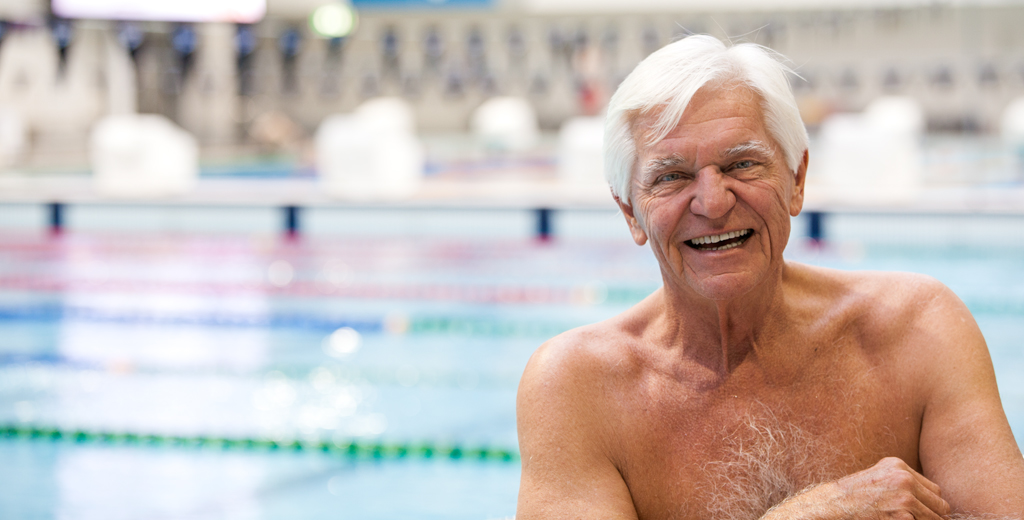

The Konrads Kid
An Olympic Champion at the 1960 Rome Games, Australian swimmer John Konrads was the poster boy of the pool for his generation. Seemingly unbeatable, John had the world at his finger tips, yet the adulation and attention came at a price. We spoke with John about the highs and lows of his career and discovered a champion who struggled to adjust to life away from the spotlight, yet had the strength to confront and speak out about his personal health issues many years later.
The son of an immigrant Latvian family, John Konrads was 7 years old when he arrived on Australian shores. By the age of 15, the eyes of the world were on him as he broke world record after world record in the pool. Short course, long course, sprint or distance, there was no race John could not master with his powering freestyle.
Yet John had barely stepped in a pool before he arrived at Neuronquita immigrant camp, just outside Sydney. There was a 33 yard pool at the camp and John's parents were worried he, or his younger sister Ilsa, would drown without the proper skills so they were enrolled in classes.
Swimming came naturally to both, yet it proved difficult to continue as their new school did not have a pool. Luckily, one of the young teachers, Don Talbot, was a promising coach and took them under his wing in the summer of 1953 and their training began at Bankstown pool.
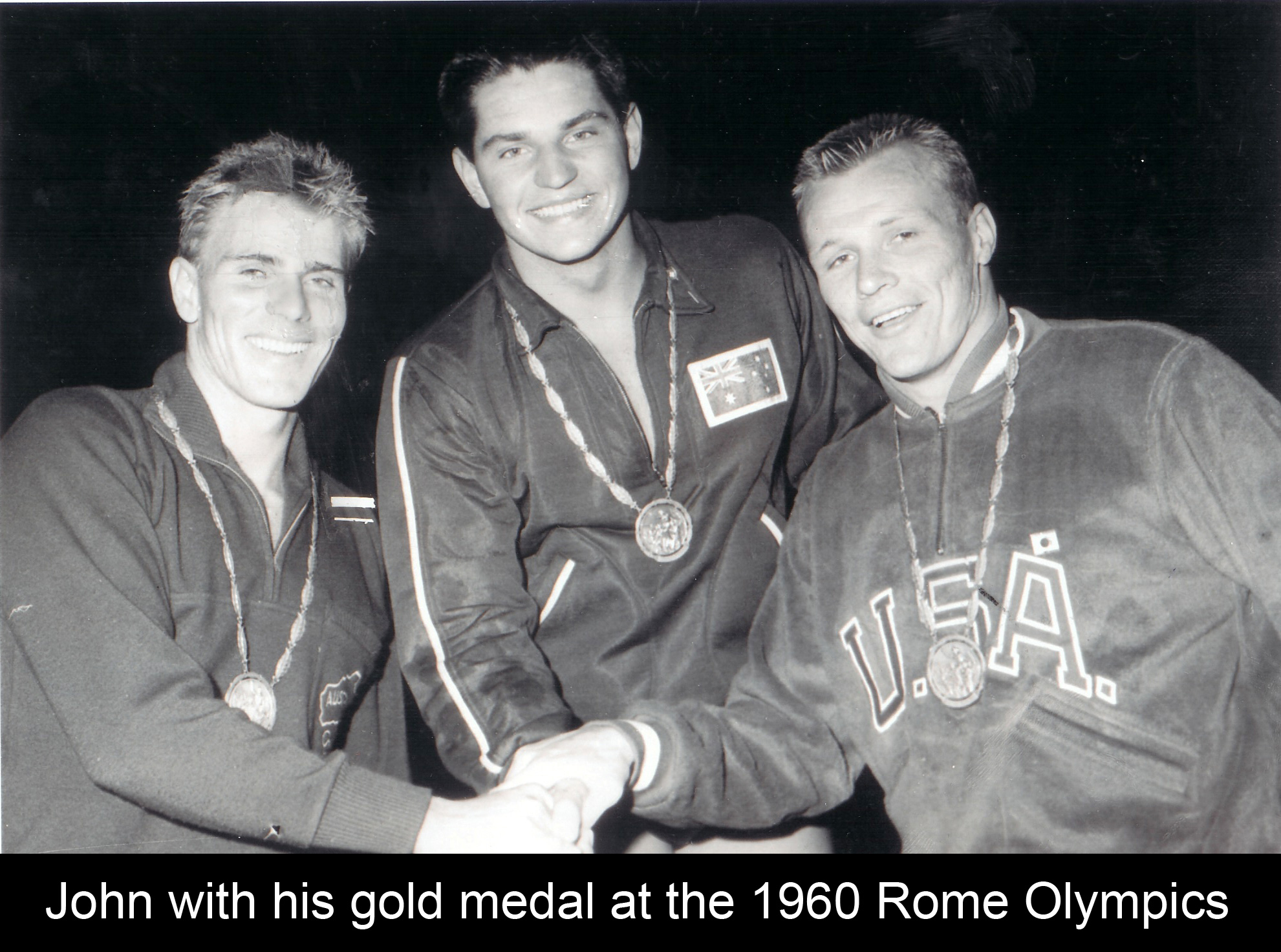
It was early 1958 when John broke his first two world records. John was unstoppable after that and was selected for the Australian Olympic swim team for the 1960 Rome Games. Walking away with a gold and two bronze is still something he cherishes, 'Ask any athlete and they will say that their goal in life is to win an Olympic gold medal, and I was no different', says John.
Another memorable occasion was thanks to Talbot, 'Don had a deal with a now defunct brand of swimwear. Nylon suits were new and they did a special gold nylon suit for me and it looked terrific. When I got out of the water after a false start it had gone almost completely transparent when wet! Talk about an embarrassing moment! I nevertheless restarted without changing and wasn't disqualified.'
Ilsa and John, or 'The Konrads Kids', became household names and were the superstars of the swimming world. John lapped it up and relished the attention and praise. 'The celebrity was nothing like today, where everything is diluted by the internet and news is global within minutes. Any interview, article or appearance was a big deal, and as a teenage boy, I loved it.' While John allowed it to feed his ambition, Ilsa shied away from the public scrutiny and retired from the pool at the early age of 19.
Yet John was always on the lookout for the next big adventure and wanted to follow swimming greats such as Murray Rose to the American college circuit, so in 1960 he arrived at the University Of Southern California (USC) in Los Angeles.
While the swimming was an obvious priority, California provided many distractions for the young star. He recalls, 'My time at USC was bordering on the hedonistic. The parties, the girls, and being able to borrow some pretty cool cars. I remember driving a girlfriend up the Californian coast in a vintage Chevy Stingray. I really felt like I was living the life I deserved.'
John's performances in the pool suffered and after a disappointing Tokyo Olympics, John felt his time in the competitive pool was nearing an end. When he was headhunted by a high-end country resort on the outskirts of Paris, looking for a 'Directeur de Natation', John jumped at the chance. Put on a pedestal from the start, John was living the high life in France, yet a holiday romance with Mikki, a young Dutch au-pair, would result in the love of his life and they would be married within the year.
Upon returning to Australia, John planned to refocus his skills on the corporate world away from the pool deck. Mikki played tennis with the Vice-President of cosmetics company L'Oreal and with typically impressive flair, John landed himself, at the age of 30, the Managing Directorship of the company's Asia Pacific enterprises.
In his own words, 'I was a good employee and businessman but not a good boss. I had the marketing, PR and people skills to keep me in the job for 14 years, but my corporate ladder was too short and I missed out on vital learning experiences and training opportunities on the way up.'
While John had enjoyed a tempestuous relationship with alcohol since the 1958 Commonwealth Games and throughout his time in the US, it became habitual during his time in the professional world. 'The wining and dining, all on a corporate tab, were too easy to enjoy, and increasingly difficult to ignore' he admits.
Since starting with L'Oreal, it became clear John's natural charisma would not suffice when there was strategic business-minded acumen required to effectively run the company in Asia Pacific. Having thrived on a wave of personal victories and adulation, these new responsibilities took John out of his depth and into periods of acute anxiety.
'There were days I would find myself staring at a piece of paper on my desk for an hour', John remembers of his darker days. He was gripped by a despair that he refers to as the 'Springtime Blues' prior to the festive period. It was a sharp contrast to the John Konrads that most people knew and led to his diagnosis with bipolar disorder.
The next few years were a rollercoaster of emotional and professional highs and lows as John continued to push himself harder to escape the feelings of insecurity. Whether marketing for Ansett Airlines, bringing the Formula 1 Grand Prix to Melbourne with the Melbourne Events Company, or managing a new swimming and fitness complex in Sydney, it was never enough.
'It was bleak. I had all the drive, all the relative successes, but was missing the sense of gratification and empowerment I was used to in the pool.' It was this bleakness that Professor Gordon Parker noticed at a committee meeting of the NSW mental health initiative, the Black Dog Institute, which Konrads had been invited to join as a high ranking corporate Australian.
'Gordon took me to one side and simply said to make an appointment to go and see him. So I did. Over the course of the next few months, he was the first person to make me realise the importance of a healthy work/life balance. I had jeopardised my relationship with my family and had been reckless with my career. I needed grounding.'
The John Konrads of today is a new man. Having moved to the Sunshine Coast to escape the Springtime Blues as best he can, not only has he been off alcohol for two years but is working his way out of dependency on both cigarettes and his anti-depressive medication.
Keeping himself busy with his nationally-recognised swim clinics and coaching at Noosa Aquatic Centre, John is back teaching kids and adults the joy and benefit of spending time in the pool, and travels widely to speak of his experiences in business, sport and battling a mental illness.
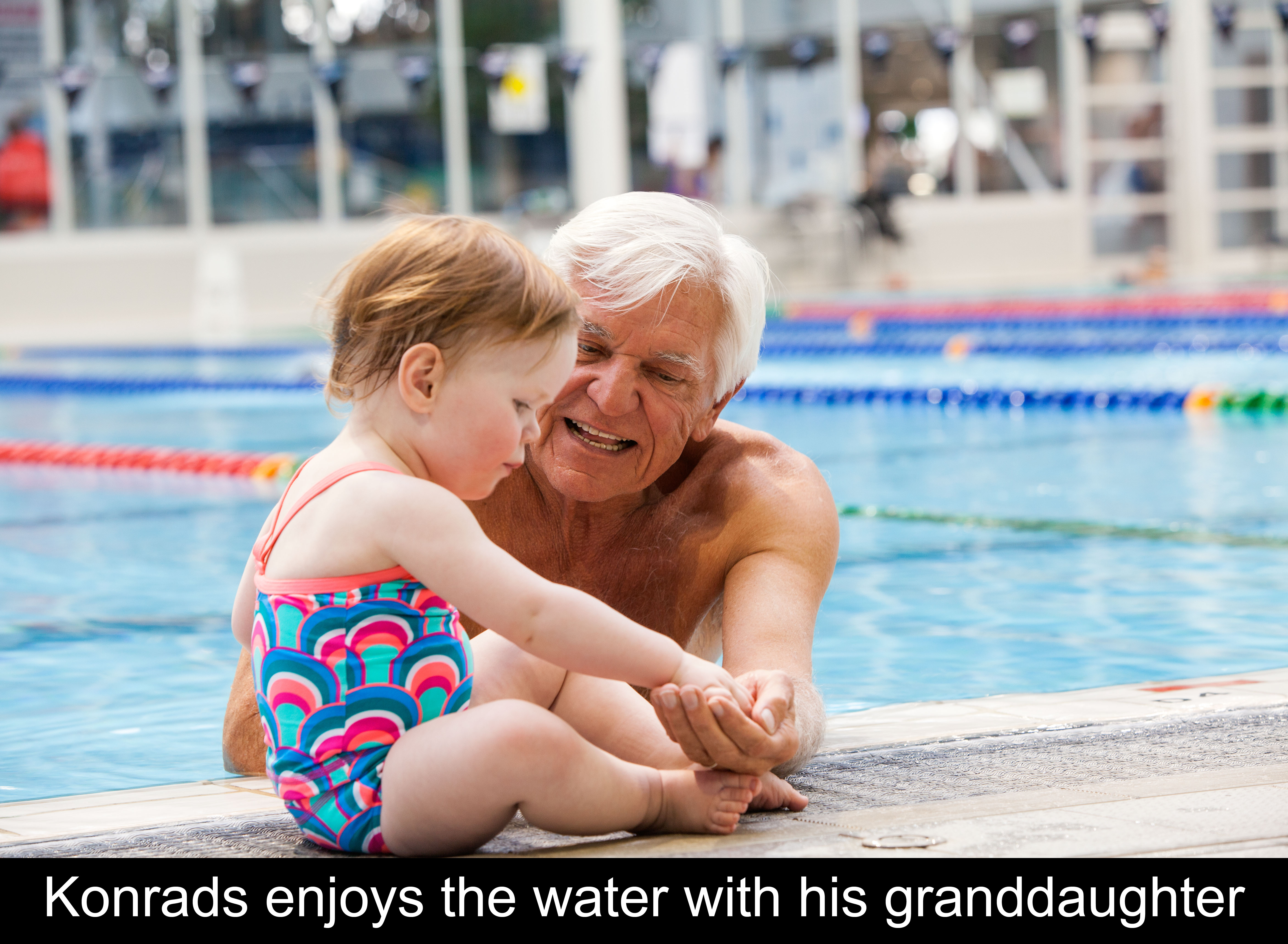
His courage to speak out about his mental health challenges rival his achievements in the pool and has made his a champion for so many who have suffered the disease in silence. At 72, John still has the unmistakable boyish smile and engaging personality that charmed Australia through his golden years, but now he can also say he is happy and content spending time with his growing family and keeping fit in the sunny Queensland water.
For more information on John's "Swim Easy" clinics, visit:
For additional imformation about mental health visit: